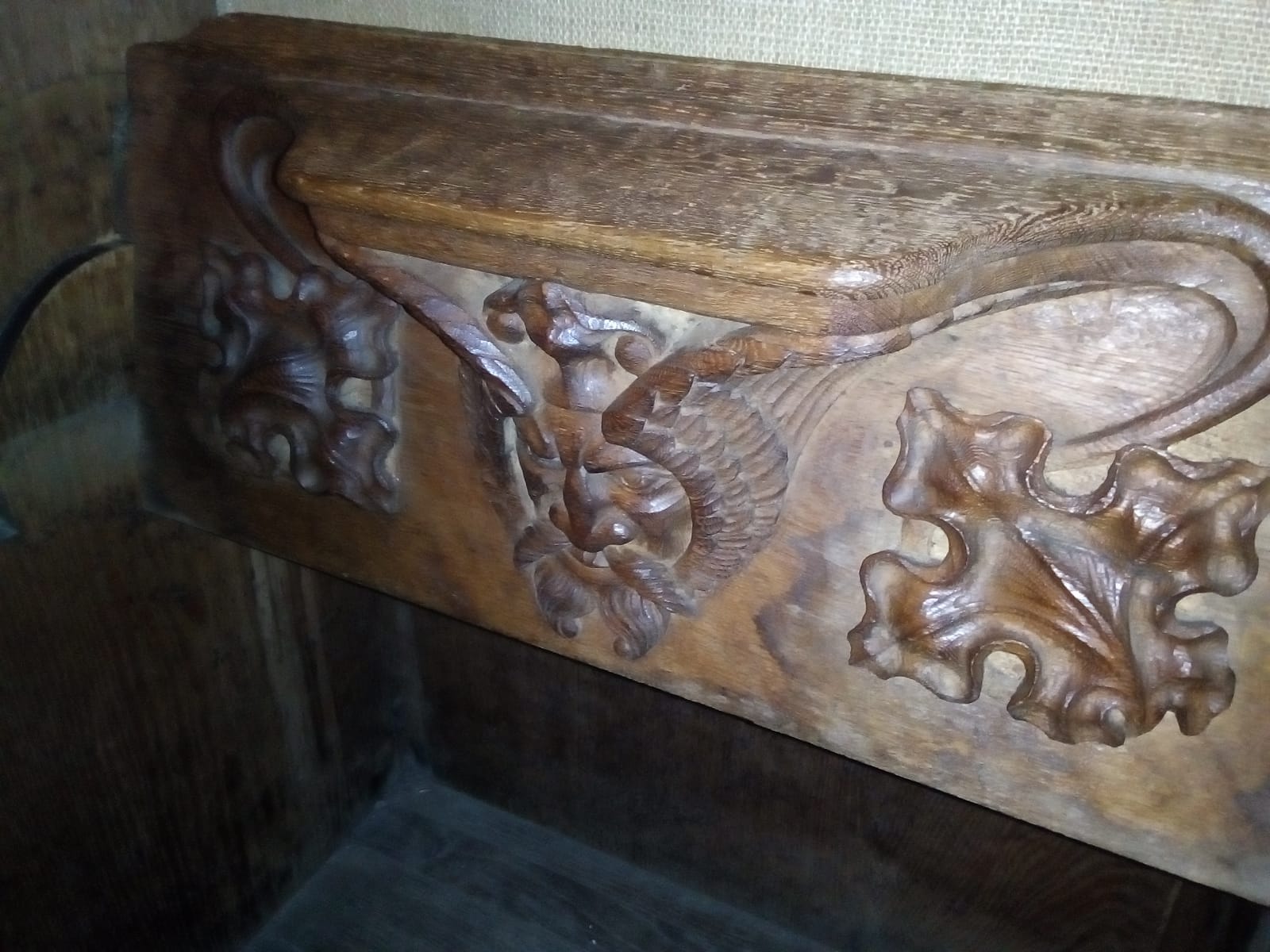
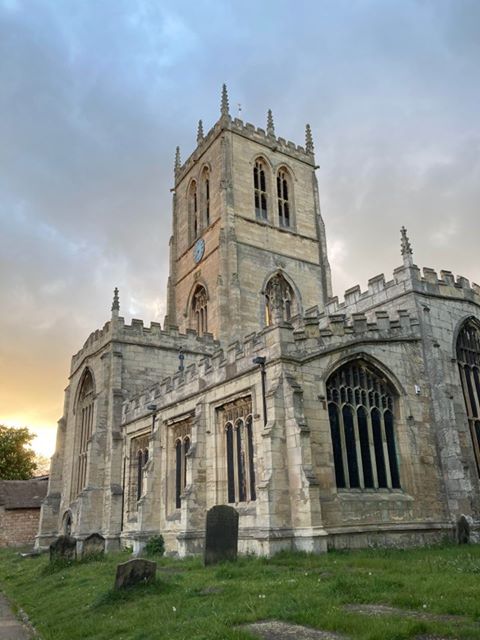
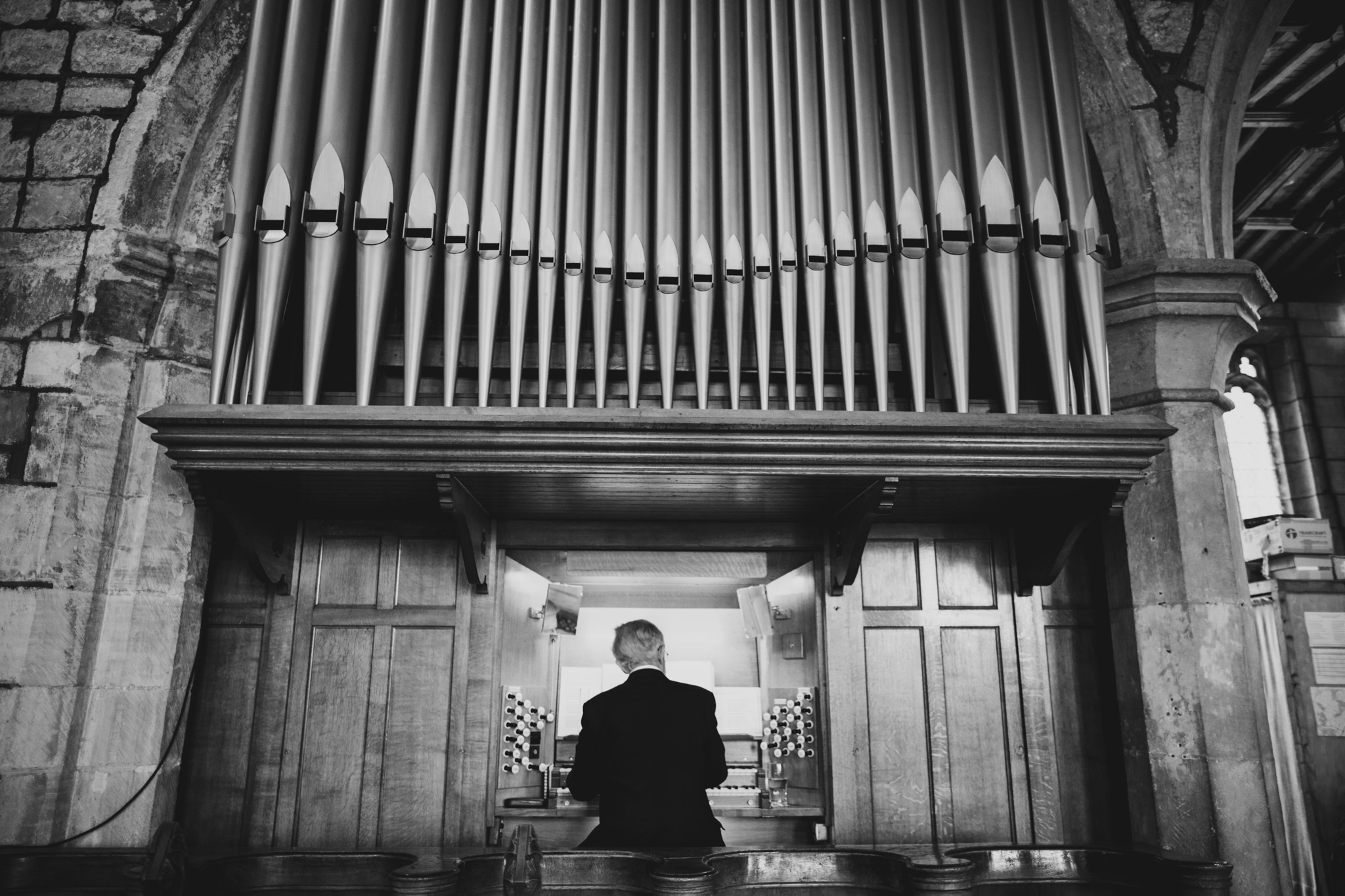
From the organ, to the tower, to the beautiful wooden carvings, St Lawrence Church is packed full of history and stories.
Visit us after our Wednesday morning service for open church to explore for yourself……
St Lawrence Church – A brief history
The Church is on the east side of Station Road in the centre of the small township of Hatfield near Doncaster and is within the Snaith and Hatfield Deanery in the Diocese of Sheffield. The Domesday Survey of 1086 mentions a church and priest at Hatfield but nothing of that church remains. It is also thought that Edwin, king of Northumbria (our first Christian king) built a church at Hatfield, probably wooden, and on the same site, and this is testified to by the writings of the Venerable Bede (circa 673-735).
The present Parish Church of St. Lawrence was probably begun in the 12th century (circa 1150), has 13th century arcades, but it is now mostly a 15th century building. The lower West end and Nave Aisle walls are 12th century, and three small Norman windows remain at this end. The inner doorway of the South Porch and the West doorway too, are also 12th century, The Nave arcades, five on each side are 13th century, replacing the original Norman work but still maintain the general impression of a Perpendicular church.
The Font comprises a circa 1300 base with four shafts around a central column, to a 19th Century octagonal bowl. A number of masons’ marks exist within the Tower and the East end, indicating that all that work was carried out at about the same time in the reign of Henry VII (1485 – 1509). The Clerestory, Transepts, Tower, Chancel, and North and South Chapels are all thought to be of that period. After this rebuilding the church was dedicated to St. Mary, whose monogram appears on the Rood Screen, but by the middle of the 18th Century the original name of St. Lawrence had reasserted itself. The Nave roof is 15th Century and has moulded tie beams and carved bosses. The Roodscreen is also 15th Century and is a particularly fine example with slender one-light divisions and has coving with Lierne ribs and pendants. Unfortunately, the Rood cross was removed during the reign of Edward VI. There is also a restored screen at the entrance to the North Chapel – now used as a Vestry.
Galleries were installed at the church in 1697 and removed in 1872 under the supervision of Sir Thomas Jackson who also raised the Belfry and the floor of the ringing chamber to allow the big windows in the lower portion of the tower to light up the crossing. The South Porch was rebuilt at the same time. Further restoration was carried out by Edwin Dolby in 1882.
The earliest parts of the current building are of pebble and rubble construction, and later parts Ashlar Limestone construction with a combination of lead, stainless steel and slate roofs. (The East End lead roofs were replaced with stainless steel, following a devastating lead theft, at a cost of around £102,000 in 2011). The church has an Embattled roofline with Pinnacles to all roofs, except for the Nave Aisles. The church is Cruciform in shape, with a tall commanding central tower over the crossing. The Tower is 100 feet high and bears, inside and out, the arms of the Savage family, one of whom, Thomas Savage was Archbishop of York from 1501 to 1507 and his brother became Bailiff of Hatfield in 1485.
There are a number of Stained Glass Windows, notably the 12th Century window with a more recent representation of St Lawrence in the West wall /Toilet cubical.
The windows in the South Aisle are by C.E.Kempe (1837 – 1907) and his assistant W.E. Tower (1873 – 1955).
All the glass in the Clerestory, the North Aisle, the South Chapel and the South Transept; and also, the Welch Memorial tablet in the South Aisle, and the lighting pendants are all fairly recent designs by G.G. Pace of York.
The North Transept has a most striking stained-glass window, dedicated in October 2000, which represents the last thousand years and Christ in His Majesty. It was designed and executed by Sep Waugh of York, utilising ideas and suggestions from the congregation, children from the two Church of England schools and from the general community of Hatfield. It has achieved worldwide recognition, and is known as the
“The Millennium Window”.
The pews, pulpit and Choir stalls are largely Victorian, though some pews display a date of 1622. The Choir Stalls were designed by Temple Moore (1856 – 1920) and the Altar by his son-in-law Leslie Moore. The Altar table itself incorporates part of an older 17th century table which was much shorter.
The peal of eight bells has not been swung since 1954 because their movement weakened the structure of the tower. The system in current use was installed in 1971 and is called ”The Ellacombe System of Chiming Church Bells”; whereby the bells do not move, but are themselves struck by a hammer. The oldest bell is the tenor bell which dates back to 1649, three others date from 1684, and the rest are about 170 years old. All the bells were last recast in 1927 at a cost of £400. Our Peal of bells is noted as being a particularly fine Peal, and we have been asked by visiting ringers if they could be re-instated. A limited structural assessment of the Tower in 2016 concluded that there were no obvious signs of distress in the tower, and no major movement when four of the bells were swung, and that with some repairs, ringing the bells full circle could possibly be re-instated at some point in the future. The immediate problem is the existing heating system which currently resides in the ringing room and prevents full circle ringing.
The Tower also houses the Clock mechanism, (electric since 1961), but the old pendulum case can still be seen from under the crossing, and the outline of the clockwork clock is still visible on the Ringing Room wall. The clock drive has recently been updated, and now automatically re-starts itself following power cuts and for Daylight Saving adjustments, guided by an external time signal.
Our Church is heated by a Crolla Pressurair, gas fired system – housed within the Ringing Room in the Tower. This was installed in 1991, replacing the previous oil fired, radiator pipe system. The issue of stratification has been a problem in recent years, causing the system to be less efficient than when first installed. We have recently updated the programming and control circuitry, which has improved the system, although it often doesn’t get warm enough for many, and as the cost of gas rises, our ability to pay for extended periods of heating reduces, the temperature is nevertheless often commented upon by the congregation, who would obviously prefer to be warmer, and there is no option for heating selective areas.
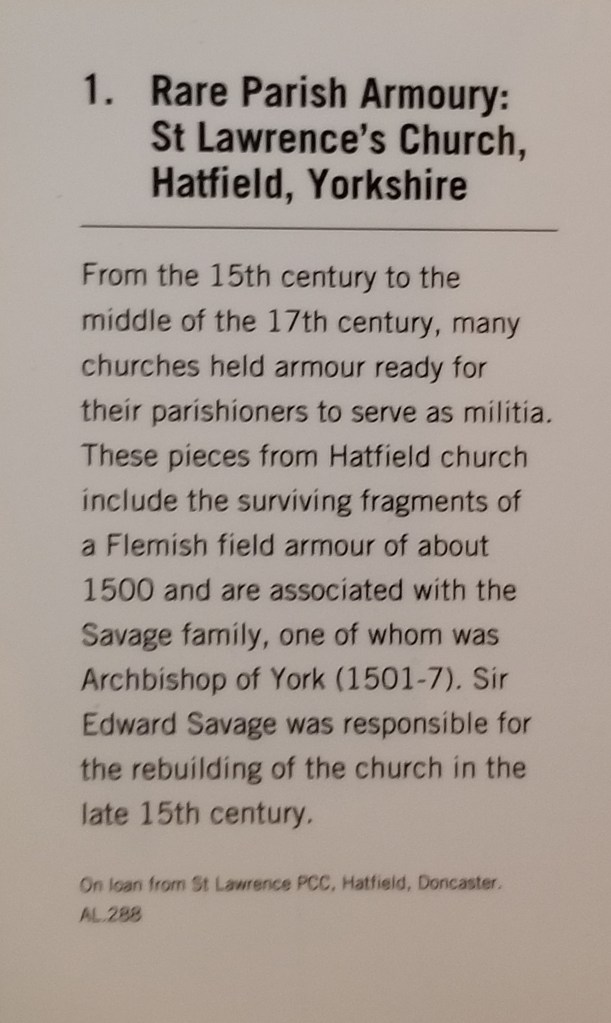
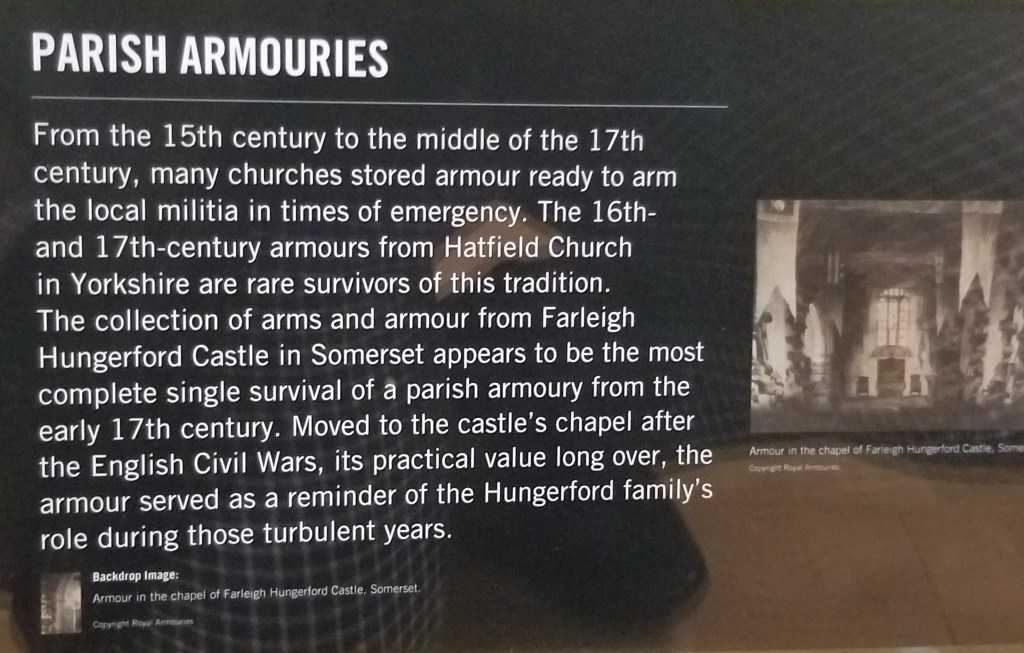
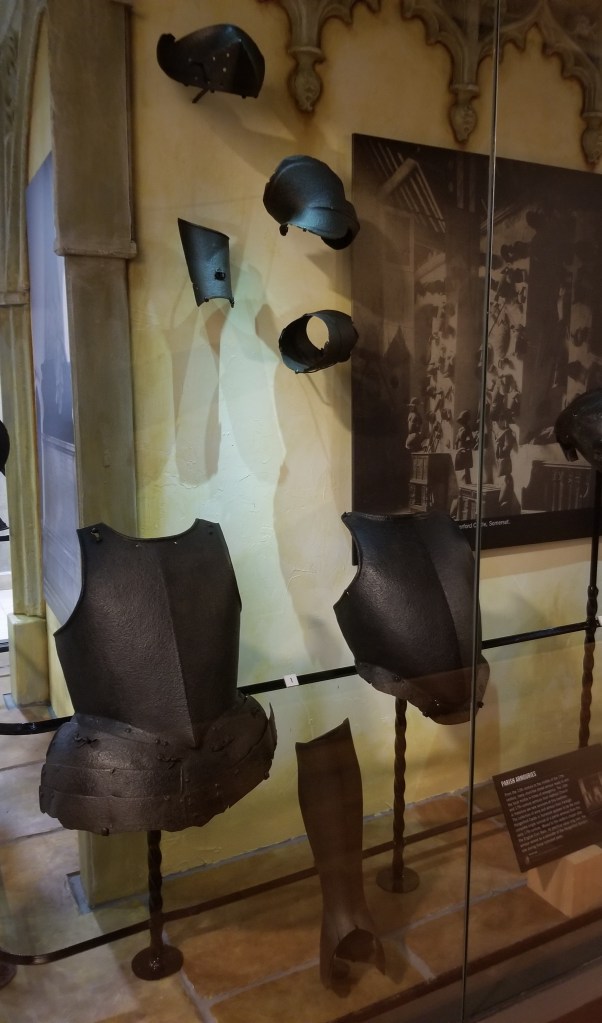
Other interesting features include a massive iron bound dug-out chest in the north aisle, referred to as Peter’s Pence Chest, this was formed from a single piece of oak. It is thought to be early 13th century, of Norman workmanship and originally it had ten locks. The jointed chest next to it might be from the 14th Century. Some sections of armour which used to hang in the South Chapel, were dated as early as 1500, and are probably associated with the founder of the Chantry. We have been told it was both very rare, and very delicate, therefore it now resides within the Royal Armouries, Leeds. There are a number of monuments and box tombs, to important local families and benefactors.
The Parish Registers begin in the reign of Elizabeth I and they record that the plague visited Hatfield in the summer of 1607. A silver Chalice and Paten which are still used during Communion services, were presented in 1773 by Paylor Jackson –a Tax Collector who lived in The Grange.
Maintaining and Safeguarding the Fabric of our building
Our Architect is Mr. Andrew Boyce, of Ferry & Mennim Architects of York. He is well known and respected within the Diocese and has taken us through a couple of repairs and improvement projects in recent years.
Our most recent Quinquennial inspection report was received in November 2019, and groups the findings to help prioritise repairs and improvements. It listed 11 items of general maintenance, 12 physical items of Priority 1 / Urgent work, 29 physical items of Priority 2 work, and 13 items of priority 3 work. Unfortunately, the onset of Covid 19 delayed our initial discussions & progress for almost 2 years following the receipt of the report.
In collaboration with our Diocesan Buildings Officer, we applied, and were successful in gaining the coveted designation of a “Major Parish Church” in July 2022. We now need to work on a Conservation Management Plan. A CMP allows everyone to agree on the values and significance of the church; and should be used to inform all decisions that affect the building. It can help in the success of grant applications, faculty applications, listed building consent and scheduled monument consent.
The Fabric of our church building is cared for locally under the direction of our Church Wardens, Standing Committee & PCC, which meets (usually monthly), to discuss any issues or on-going projects. Approved projects are ably pushed through to completion by our Project Manager.
The majority of work completed on our building is funded by the Hatfield Church Building Trust, and its local fundraising arm – The Friends of the Hatfield Church Building Trust, and through special donations, legacies, & local appeals. The Building Trust was set up to enable and encourage the local town residents to donate towards protecting and repairing their church building, without having to support the work of the church generally. This trust has been hugely successful since its beginnings in January 1997 and has spawned a number of similar trusts within the Diocese.
Our Biggest projects to date have been the East End Roof replacement following a lead theft in June 2011, and Our Organ Restoration (2003 –2011). Both projects cost approximately £100,000.00 each, and both were largely funded by local fundraising efforts rather than outside funders. More recently we have undertaken a full glazing survey, to properly prioritize window repairs as called up in our QI and the removal of an unsafe wall monument found to be unsafe during our QI. The monument is currently undergoing repair & conservation, and we hope to re-instate it some time in the future. The Glazing survey has not yet been used to drive any long-term window restoration / repairs; but has been very useful following a recent spate of malicious window vandalism involving 20+ glass repairs. Thankfully, this level of needless vandalism has not been seen before at our church, and we hope it proves to be a one off.
As a follow-on from the recent vandalism, we are also currently working on an on-going development project, to upgrade our roof alarm and to install CCTV equipment to protect our roofs and windows alike. List B permission has been granted by the Archdeacon, and we have simultaneously applied for a grant for this. Work should start soon, and if the funding grant is un-successful, we can rely on the H.C.B.T. to pay.
Additionally over the last year we have applied for permissions for and installed new 2 notice boards to replace an older notice board which collapsed, we have restored power to our Organ after the 3 phase supply cable failed, and we have removed some old and little used pews from the back and South Aisle of our church; We are steadily transitioning our current lighting scheme moving from fluorescent stick bulbs to LED’s.
 Hatfield St Lawrence Church